
 People & Feelings
How do feelings work?
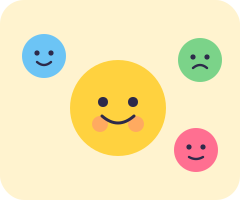
One minute you are giggling, the next you are grumpy, and later you are bursting with excitement. These ups and downs are your feelings. But how do they actually work?
Feelings are messages from your brain
A feeling is a little message your brain sends about what is happening around you and inside you. When something good happens, your brain sends a happy feeling. When you lose a toy, it sends a sad one. When something is unfair, you might feel cross. And before a party, your brain buzzes with excited!
Feelings are not good or bad — they are helpers. They tell you what matters to you, like little arrows pointing at what you care about.
Everyone has them
Every single person has feelings, all day long — your friends, your teacher, even grown-ups. Sometimes feelings are big and loud, sometimes small and quiet. They can change quickly, like clouds drifting across the sky. That is completely normal.
Naming a feeling helps
Here is a clever trick. When a feeling is strong, name it: “I feel angry,” or “I feel nervous.” Putting a word on it is like switching on a light in a dark room — the feeling stops being so scary and becomes easier to handle. Then you can take a breath and decide what to do next.
Wonder fact: Scientists think humans share at least six main feelings — happy, sad, angry, scared, surprised and disgusted — that people show with their faces all around the world!
 Try the quiz on this topic