7 questions · Four answers, and only one is true. Can you spot it?
-
Question 1 of 7

What lives at the bottom of the sea?
-
Plants need sunlight, and none reaches down there.
-
It is dark, but it is full of life.
-
Their food drifts down from far above, like a slow snow.
-
Deep-sea animals are strange ones that never come up.
Show the answer
- A Plants need sunlight, and none reaches down there.
- B It is dark, but it is full of life.
- C Their food drifts down from far above, like a slow snow.
- D Deep-sea animals are strange ones that never come up.
Read the story →
-
Question 2 of 7

Why do some things float and others sink?
-
A huge ship floats and a small pebble sinks.
-
Water pushes up on everything — which is why hollowing a lump of steel into a bowl makes it float.
-
A wooden spoon floats, but so does a steel bowl.
-
A heavy ship floats — what matters is heavy for its size.
Show the answer
- A A huge ship floats and a small pebble sinks.
- B Water pushes up on everything — which is why hollowing a lump of steel into a bowl makes it float.
- C A wooden spoon floats, but so does a steel bowl.
- D A heavy ship floats — what matters is heavy for its size.
Read the story →
-
Question 3 of 7

What makes rivers flow?
-
The sea does no pulling; the river arrives because down is that way.
-
A river runs on a windless day, and even straight into the wind.
-
The water was flowing long before any fish arrived.
-
Rain falls on the hills, gathers into streams, and slides all the way down to the sea.
Show the answer
- A The sea does no pulling; the river arrives because down is that way.
- B A river runs on a windless day, and even straight into the wind.
- C The water was flowing long before any fish arrived.
- D Rain falls on the hills, gathers into streams, and slides all the way down to the sea.
Read the story →
-
Question 4 of 7
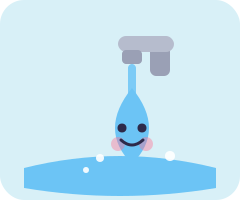
Where does tap water come from?
-
Sea water is far too salty to drink.
-
No pipe reaches a cloud; the rain has to fall first.
-
The waterworks cleans water, it does not create it.
-
It waits in lakes or underground first. That water is millions of years old — a dinosaur may have sipped it.
Show the answer
- A Sea water is far too salty to drink.
- B No pipe reaches a cloud; the rain has to fall first.
- C The waterworks cleans water, it does not create it.
- D It waits in lakes or underground first. That water is millions of years old — a dinosaur may have sipped it.
Read the story →
-
Question 5 of 7

Why does ice float?
-
Most things shrink when they harden; water is the odd one out.
-
Even perfectly clear ice with no bubbles in it floats.
-
A cold stone sinks just as fast as a warm one.
-
Water pushes up on everything the same — it is the ice that changed.
Show the answer
- A Most things shrink when they harden; water is the odd one out.
- B Even perfectly clear ice with no bubbles in it floats.
- C A cold stone sinks just as fast as a warm one.
- D Water pushes up on everything the same — it is the ice that changed.
Read the story →
-
Question 6 of 7

Why are there waves in the sea?
-
Waves roll on across seas far too deep and empty for that.
-
The water itself mostly stays where it is; only the shape moves on across it.
-
Watch a floating gull: it bobs up and down and stays put.
-
The sea is cold, and waves cross it in winter too.
Show the answer
- A Waves roll on across seas far too deep and empty for that.
- B The water itself mostly stays where it is; only the shape moves on across it.
- C Watch a floating gull: it bobs up and down and stays put.
- D The sea is cold, and waves cross it in winter too.
Read the story →
-
Question 7 of 7

Why is the sea salty?
-
No one could ever have carried that much salt — enough to bury the land.
-
The sea was salty long before there were any fish in it.
-
Rain is fresh water; you can drink it.
-
They carry it to the sea; the water then floats away as vapour and leaves every grain behind.
Show the answer
- A No one could ever have carried that much salt — enough to bury the land.
- B The sea was salty long before there were any fish in it.
- C Rain is fresh water; you can drink it.
- D They carry it to the sea; the water then floats away as vapour and leaves every grain behind.
Read the story →
