9 questions · Four answers, and only one is true. Can you spot it?
-
Question 1 of 9
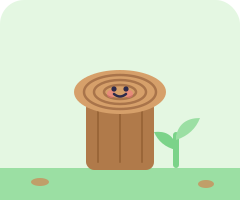
How can we tell how old a tree is?
-
Branches break and new ones sprout all the time.
-
One ring for each year — a wide one means a good year, a thin one a hard year, so they tell stories too.
-
Bark tells you the kind of tree more than the years.
-
Trees grow at very different speeds; a short old tree is quite ordinary.
Show the answer
- A Branches break and new ones sprout all the time.
- B One ring for each year — a wide one means a good year, a thin one a hard year, so they tell stories too.
- C Bark tells you the kind of tree more than the years.
- D Trees grow at very different speeds; a short old tree is quite ordinary.
Read the story →
-
Question 2 of 9

Why do leaves fall in autumn?
-
Dropping the leaves is how the tree *saves* water for winter.
-
The tree lets go first; the wind only carries them away.
-
It stops feeding them first — the green fades, and the reds and golds hiding underneath get their turn.
-
The tree is not dying at all — it is resting on purpose.
Show the answer
- A Dropping the leaves is how the tree *saves* water for winter.
- B The tree lets go first; the wind only carries them away.
- C It stops feeding them first — the green fades, and the reds and golds hiding underneath get their turn.
- D The tree is not dying at all — it is resting on purpose.
Read the story →
-
Question 3 of 9
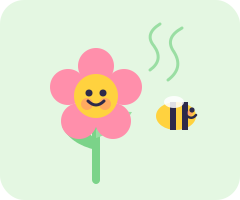
Why do flowers smell nice?
-
A bee comes for the nectar and leaves dusted with pollen — which is how seeds get made.
-
It calls them in; that is the whole point.
-
Flowers were scenting the world long before there were gardeners.
-
A flower smells sweetest on a dry, warm day.
Show the answer
- A A bee comes for the nectar and leaves dusted with pollen — which is how seeds get made.
- B It calls them in; that is the whole point.
- C Flowers were scenting the world long before there were gardeners.
- D A flower smells sweetest on a dry, warm day.
Read the story →
-
Question 4 of 9

How do trees grow so tall?
-
The roots hold them steady; wood is stiff enough for a tree taller than a thirty-floor building.
-
Rain falls on short plants just as well — it is the light they climb towards.
-
Soil holds still; the growing is the tree's own work.
-
Wind bends a tree; it does not lengthen it.
Show the answer
- A The roots hold them steady; wood is stiff enough for a tree taller than a thirty-floor building.
- B Rain falls on short plants just as well — it is the light they climb towards.
- C Soil holds still; the growing is the tree's own work.
- D Wind bends a tree; it does not lengthen it.
Read the story →
-
Question 5 of 9

What are mushrooms?
-
The part that pops up is only the tip; most of a fungus spreads through the soil, tidying away what has rotted.
-
Plants make their own food from sunlight; mushrooms cannot.
-
A mushroom has no wood, no roots and no leaves.
-
They never move or eat the way animals do.
Show the answer
- A The part that pops up is only the tip; most of a fungus spreads through the soil, tidying away what has rotted.
- B Plants make their own food from sunlight; mushrooms cannot.
- C A mushroom has no wood, no roots and no leaves.
- D They never move or eat the way animals do.
Read the story →
-
Question 6 of 9
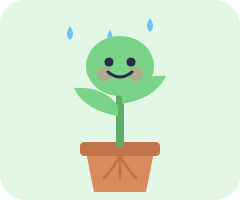
Why does a plant need water?
-
A plant makes its own food; water is one of the ingredients.
-
Plants grow happily in warm soil as long as it is damp.
-
Take the water away and the whole plant flops over.
-
A dusty leaf still works; a dry plant does not.
Show the answer
- A A plant makes its own food; water is one of the ingredients.
- B Plants grow happily in warm soil as long as it is damp.
- C Take the water away and the whole plant flops over.
- D A dusty leaf still works; a dry plant does not.
Read the story →
-
Question 7 of 9
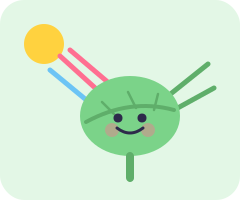
Why are leaves green?
-
Soil is brown, and a leaf on a windowsill in plain water still turns green.
-
It soaks up the other colours and bounces green back — and it is what catches sunlight to make the plant's food.
-
Water has no colour at all.
-
Nobody paints them; the colour is made inside the leaf.
Show the answer
- A Soil is brown, and a leaf on a windowsill in plain water still turns green.
- B It soaks up the other colours and bounces green back — and it is what catches sunlight to make the plant's food.
- C Water has no colour at all.
- D Nobody paints them; the colour is made inside the leaf.
Read the story →
-
Question 8 of 9

How do flowers make seeds?
-
Bees come for the nectar and leave dusted with pollen.
-
Soil feeds a plant; it holds no seeds of its own.
-
Rain helps a plant grow, but a seed needs pollen.
-
A bee, a butterfly or the wind carries it. That journey is called pollination, and the seeds come after it.
Show the answer
- A Bees come for the nectar and leave dusted with pollen.
- B Soil feeds a plant; it holds no seeds of its own.
- C Rain helps a plant grow, but a seed needs pollen.
- D A bee, a butterfly or the wind carries it. That journey is called pollination, and the seeds come after it.
Read the story →
-
Question 9 of 9
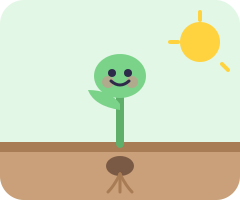
How do seeds grow into plants?
-
Water and warmth wake it: the root goes down, the shoot goes up, and the packed lunch runs it until the leaves open.
-
The plant was folded up inside the seed all along.
-
Soil holds the seed up and keeps it damp, but the plant comes out of the seed.
-
Most seeds start underground in the dark; light matters once the leaves are out.
Show the answer
- A Water and warmth wake it: the root goes down, the shoot goes up, and the packed lunch runs it until the leaves open.
- B The plant was folded up inside the seed all along.
- C Soil holds the seed up and keeps it damp, but the plant comes out of the seed.
- D Most seeds start underground in the dark; light matters once the leaves are out.
Read the story →
