10 questions · Four answers, and only one is true. Can you spot it?
-
Question 1 of 10

How do we move our body?
-
Blood delivers what muscles need, but it does no pushing.
-
A bone is a stiff pole; it cannot move without a muscle.
-
It travels down nerves. Muscles can only pull, so they work in teams — one pulls each way.
-
A muscle only ever pulls — that is why they come in pairs.
Show the answer
- A Blood delivers what muscles need, but it does no pushing.
- B A bone is a stiff pole; it cannot move without a muscle.
- C It travels down nerves. Muscles can only pull, so they work in teams — one pulls each way.
- D A muscle only ever pulls — that is why they come in pairs.
Read the story →
-
Question 2 of 10

Why do we have bones?
-
They also give muscles something to pull on. The skull guards the brain, the ribs the heart and lungs.
-
Three tiny bones do help in each ear — but that is three out of about two hundred.
-
Bones do store some things, but food is not one of them.
-
Gravity does that for everything, bones or no bones.
Show the answer
- A They also give muscles something to pull on. The skull guards the brain, the ribs the heart and lungs.
- B Three tiny bones do help in each ear — but that is three out of about two hundred.
- C Bones do store some things, but food is not one of them.
- D Gravity does that for everything, bones or no bones.
Read the story →
-
Question 3 of 10
Why does our heart beat?
-
It delivers oxygen and food — about a hundred thousand squeezes a day, without ever being told.
-
It does speed up — but it never stops when we are calm.
-
Being busy all over is what keeps you warm; the heart just pumps.
-
It is doing a job, not sending a message.
Show the answer
- A It delivers oxygen and food — about a hundred thousand squeezes a day, without ever being told.
- B It does speed up — but it never stops when we are calm.
- C Being busy all over is what keeps you warm; the heart just pumps.
- D It is doing a job, not sending a message.
Read the story →
-
Question 4 of 10

How do we digest food?
-
Chewing is only the start of a very long journey.
-
Then the long tubes take out what the body needs, and the rest travels on to the end.
-
Nothing burns inside you; the food is broken into small pieces.
-
Your dinner can spend a whole day or more travelling through you.
Show the answer
- A Chewing is only the start of a very long journey.
- B Then the long tubes take out what the body needs, and the rest travels on to the end.
- C Nothing burns inside you; the food is broken into small pieces.
- D Your dinner can spend a whole day or more travelling through you.
Read the story →
-
Question 5 of 10

Why do we sneeze?
-
And germs. Sensors spot the bother, the brain says go, and out rushes the air.
-
A cold nose gives you shivers, not sneezes.
-
A sneeze is the blow — it happens whether you want it or not.
-
You sneeze on a small breath just as easily.
Show the answer
- A And germs. Sensors spot the bother, the brain says go, and out rushes the air.
- B A cold nose gives you shivers, not sneezes.
- C A sneeze is the blow — it happens whether you want it or not.
- D You sneeze on a small breath just as easily.
Read the story →
-
Question 6 of 10
Why do we breathe?
-
We breathe out what it no longer wants — about twenty thousand times a day, almost all without a thought.
-
Panting cools a dog; people breathe to live.
-
The moving is how the air gets in; it is not the point.
-
Talking borrows the breath on its way out.
Show the answer
- A We breathe out what it no longer wants — about twenty thousand times a day, almost all without a thought.
- B Panting cools a dog; people breathe to live.
- C The moving is how the air gets in; it is not the point.
- D Talking borrows the breath on its way out.
Read the story →
-
Question 7 of 10

Why do we get sick?
-
There is a real cause, small enough to be invisible.
-
Cold weather alone does not make anyone ill.
-
Good food helps you fight, but germs are what make you ill.
-
The body sends its own army after them; a fever is part of that fight, and washing hands keeps many out.
Show the answer
- A There is a real cause, small enough to be invisible.
- B Cold weather alone does not make anyone ill.
- C Good food helps you fight, but germs are what make you ill.
- D The body sends its own army after them; a fever is part of that fight, and washing hands keeps many out.
Read the story →
-
Question 8 of 10
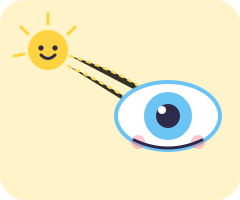
How do we see things?
-
The eye really does make a picture; the brain then reads it.
-
It makes a tiny picture there, upside down — and your brain flips it without ever telling you.
-
What travels is light bouncing off them.
-
Shut off every light and you see nothing at all, however wide you open your eyes.
Show the answer
- A The eye really does make a picture; the brain then reads it.
- B It makes a tiny picture there, upside down — and your brain flips it without ever telling you.
- C What travels is light bouncing off them.
- D Shut off every light and you see nothing at all, however wide you open your eyes.
Read the story →
-
Question 9 of 10

Why do we cry?
-
They keep the eye wet too. Humans may be the only animals that cry because of how they feel.
-
Tears wash the eye, not the face.
-
The eye makes the tears on purpose, when it needs them.
-
People cry with laughter and with relief too.
Show the answer
- A They keep the eye wet too. Humans may be the only animals that cry because of how they feel.
- B Tears wash the eye, not the face.
- C The eye makes the tears on purpose, when it needs them.
- D People cry with laughter and with relief too.
Read the story →
-
Question 10 of 10

Why do our teeth fall out?
-
Brushing matters, but a wobbly milk tooth is good news.
-
Milk teeth wobble out on soft food too, at just the right age.
-
A milk tooth leaves with its root dissolved, not worn down.
-
It loosens the little one. About twenty milk teeth make way for up to thirty-two grown-up ones.
Show the answer
- A Brushing matters, but a wobbly milk tooth is good news.
- B Milk teeth wobble out on soft food too, at just the right age.
- C A milk tooth leaves with its root dissolved, not worn down.
- D It loosens the little one. About twenty milk teeth make way for up to thirty-two grown-up ones.
Read the story →
