10 questions · Four answers, and only one is true. Can you spot it?
-
Question 1 of 10
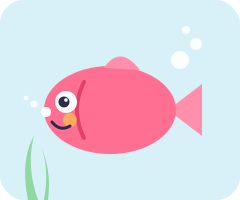
How do fish breathe under water?
-
Nobody could hold their breath for a lifetime.
-
Breathing happens at the gills, long before the tummy.
-
It flows past as they swim; there is oxygen hidden in water, and gills are very good at catching it.
-
Most fish never come up at all — and would suffocate on deck.
Show the answer
- A Nobody could hold their breath for a lifetime.
- B Breathing happens at the gills, long before the tummy.
- C It flows past as they swim; there is oxygen hidden in water, and gills are very good at catching it.
- D Most fish never come up at all — and would suffocate on deck.
Read the story →
-
Question 2 of 10
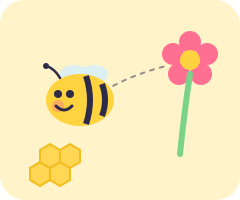
How do bees make honey?
-
Honey is made in the honeycomb, up in the hive.
-
They pass it along from bee to bee first; thin flower juice goes in, thick golden honey comes out.
-
Flowers hold nectar, which is far thinner and less sweet.
-
Bees have no sugar bowl — the sweetness comes from flowers.
Show the answer
- A Honey is made in the honeycomb, up in the hive.
- B They pass it along from bee to bee first; thin flower juice goes in, thick golden honey comes out.
- C Flowers hold nectar, which is far thinner and less sweet.
- D Bees have no sugar bowl — the sweetness comes from flowers.
Read the story →
-
Question 3 of 10
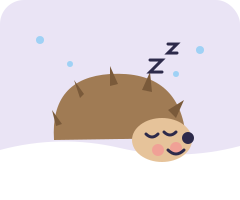
Why do some animals sleep all winter?
-
Slowing down is about food, not comfort; they stay cold the whole time.
-
They live off stored fat; a hibernating squirrel's heart can drop from over 200 beats a minute to just a few.
-
It is the cold and the missing food, not the dark.
-
They eat a lot beforehand on purpose — that store is what keeps them alive.
Show the answer
- A Slowing down is about food, not comfort; they stay cold the whole time.
- B They live off stored fat; a hibernating squirrel's heart can drop from over 200 beats a minute to just a few.
- C It is the cold and the missing food, not the dark.
- D They eat a lot beforehand on purpose — that store is what keeps them alive.
Read the story →
-
Question 4 of 10
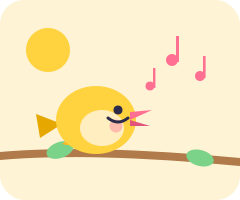
Why do birds sing?
-
A singing bird is easier to find, not harder.
-
One bird, the lyrebird, is a famous copycat — but most sing their own tune.
-
A song is work, not just a mood.
-
They are talking, and each kind of bird has its own tune to talk in.
Show the answer
- A A singing bird is easier to find, not harder.
- B One bird, the lyrebird, is a famous copycat — but most sing their own tune.
- C A song is work, not just a mood.
- D They are talking, and each kind of bird has its own tune to talk in.
Read the story →
-
Question 5 of 10
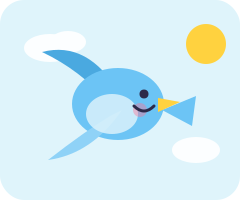
How do birds fly?
-
A bird falls if it stops flying, so it is heavier than the air.
-
Their bones are light and hollow. Push enough air down and you go up — then a bird can glide.
-
A bird takes off on a perfectly still day.
-
Feathers are full of nothing but air, and are for pushing with.
Show the answer
- A A bird falls if it stops flying, so it is heavier than the air.
- B Their bones are light and hollow. Push enough air down and you go up — then a bird can glide.
- C A bird takes off on a perfectly still day.
- D Feathers are full of nothing but air, and are for pushing with.
Read the story →
-
Question 6 of 10
Why do animals have things in common?
-
There are millions of different plans — but they are related plans.
-
Same needs bring the same tools, and shared family brings shared instructions.
-
An animal cannot copy a body it was born with.
-
Too many animals share too much for chance.
Show the answer
- A There are millions of different plans — but they are related plans.
- B Same needs bring the same tools, and shared family brings shared instructions.
- C An animal cannot copy a body it was born with.
- D Too many animals share too much for chance.
Read the story →
-
Question 7 of 10
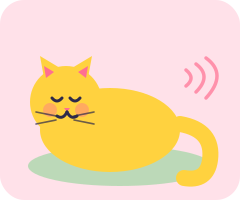
Why do cats purr?
-
Often when they feel safe — but sometimes to calm themselves, so a hurt cat may purr too.
-
Cats purr wide awake, with their eyes open.
-
A purr comes from the throat, and a full cat purrs just as loudly.
-
You can hear a cat's heart as well — it is much quieter and much faster.
Show the answer
- A Often when they feel safe — but sometimes to calm themselves, so a hurt cat may purr too.
- B Cats purr wide awake, with their eyes open.
- C A purr comes from the throat, and a full cat purrs just as loudly.
- D You can hear a cat's heart as well — it is much quieter and much faster.
Read the story →
-
Question 8 of 10
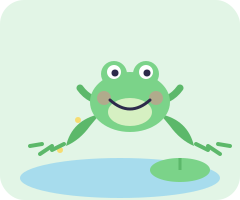
Why do frogs jump?
-
Frogs jump in cool, wet places most of all.
-
A frog likes to stay damp, not dry.
-
To escape danger and to catch food; some small frogs leap more than twenty times their own length.
-
Many frogs walk and climb perfectly well.
Show the answer
- A Frogs jump in cool, wet places most of all.
- B A frog likes to stay damp, not dry.
- C To escape danger and to catch food; some small frogs leap more than twenty times their own length.
- D Many frogs walk and climb perfectly well.
Read the story →
-
Question 9 of 10
How do chameleons change colour?
-
The colour comes from their own skin.
-
Spread out or squeezed close together, those cells throw back a different colour.
-
The change takes seconds, and it is the same skin all along.
-
What they eat does not tint them at all.
Show the answer
- A The colour comes from their own skin.
- B Spread out or squeezed close together, those cells throw back a different colour.
- C The change takes seconds, and it is the same skin all along.
- D What they eat does not tint them at all.
Read the story →
-
Question 10 of 10
How do spiders make webs?
-
Silk is far too fine to be made of either.
-
The pattern is built on purpose, thread by thread.
-
The thread is brand new, and comes from inside the spider.
-
Some threads are sticky and some are not — the spider walks on the ones it left unsticky.
Show the answer
- A Silk is far too fine to be made of either.
- B The pattern is built on purpose, thread by thread.
- C The thread is brand new, and comes from inside the spider.
- D Some threads are sticky and some are not — the spider walks on the ones it left unsticky.
Read the story →
