
 Earth & World
Why do volcanoes erupt?
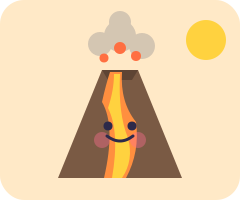
A volcano can sit quietly for years, then suddenly roar and shoot fiery rock into the sky. What makes a mountain do that?
It is super hot down deep
Far below your feet, deep inside the Earth, it is so hot that solid rock melts into a thick, runny liquid. This melted rock is called magma. Imagine a chocolate bar left in a sunny car until it turns gooey — the Earth’s deep rock goes gooey like that, but much, much hotter.
Magma wants to rise
Here is the clever part. Melted magma is lighter than the cold, hard rock around it. Lighter things float up — like a bubble in fizzy water. So the magma slowly pushes upward, squeezing through cracks, looking for a way out.
The big burst
When the magma finally reaches the top of a mountain, it bursts out through an opening. Now we give it a new name: lava. Out come glowing red rock, ash and steam. That is an eruption! As the lava cools, it hardens into new rock — and that is how volcanoes slowly build themselves bigger.
Wonder fact: The biggest volcano we know isn’t on Earth at all. It is called Olympus Mons, on the planet Mars, and it is nearly three times taller than Mount Everest!
 Try the quiz on this topic