
 Animals
Why do cats purr?
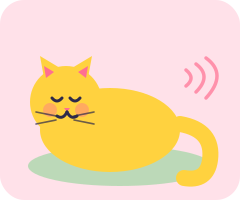
A cat snuggles onto your lap, closes its eyes, and starts to rumble — purrrr. You can even feel it buzzing through your hands. But what makes that cosy sound?
A little buzz in the throat
Deep in a cat’s throat is a body part called the voice box. It is the same part a cat uses to meow. To purr, the cat sends very fast little wobbles to the muscles around its voice box.
These muscles tremble super quickly — about 25 times every second! As the cat breathes air in and out, the air pushes past the trembling muscles and makes that soft, rolling rumble. That is why a purr does not stop when the cat breathes in — it just keeps going.
A happy sound
Most of the time, a cat purrs because it feels safe and cosy. A kitten purrs to tell its mother, “I am happy and warm.” A grown cat purrs when you stroke it gently.
Purring as a comfort
Here is a surprise: cats sometimes purr when they are sore or scared, too. Scientists think the gentle buzzing helps a cat calm itself down and feel better, a bit like humming a tune when you are nervous.
Wonder fact: Big cats like lions can roar, but they cannot purr the same way. Cats are usually either roarers or purrers — not both!
 Try the quiz on this topic