
 How Things Work
How does a car move?
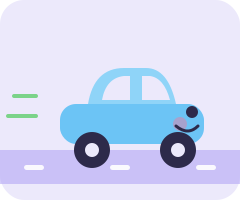
You climb into a car, the grown-up presses a pedal, and the car rolls forward. There is no one pushing it from behind — so what makes it go?
A spinning power-maker
Hidden inside every car is a machine that makes the power to move. Some cars have an engine that burns a special fuel, like petrol, to make that power. Other cars have an electric motor that gets its power from a big battery.
Whichever kind it is, the job is the same: to spin the wheels round and round.
Wheels grip the road
The wheels are wrapped in soft rubber tyres. As the wheels spin, the tyres press down and grip the road.
Here is the clever part: the tyres push backwards against the ground, and the ground pushes back. That gentle pushing-against-each-other is what rolls the car forward. No grip, no go!
Steering and stopping
The driver turns the steering wheel to point the front tyres left or right, so the car can follow the road. To stop, the driver presses the brake, which squeezes the wheels and slows them down.
So a car is really a team: a power-maker to spin the wheels, and grippy tyres to push against the road.
Wonder fact: A rolling tyre touches the road on a patch only about the size of your hand — yet that small grip carries the whole car!
 Try the quiz on this topic