
 Animals
How do spiders make webs?
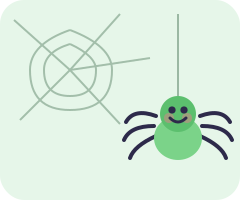
Have you ever seen a shiny web strung between two plants in the morning? A spider made it all by itself, with no needle and no string from a shop. So where does the thread come from?
Silk made inside the spider
A spider carries its own thread inside its body. This special thread is called silk. The silk starts out as a runny liquid, a bit like glue.
At the back of the spider are tiny bumps called spinnerets. When the silk comes out of them and meets the air, it turns from a liquid into a strong, stretchy thread — thinner than your hair but very tough.
Building a sticky trap
The spider uses its silk to build a web that works like a trap. First it makes strong threads that hold the web up, like the spokes of a wheel. Then it adds round threads covered in tiny sticky drops.
When a flying insect bumps into the web, it gets stuck on the sticky drops and cannot escape. That is the spider’s dinner caught!
Why doesn’t the spider get stuck?
Clever question! Some threads in the web are sticky, but some are not sticky at all. The spider remembers which is which and carefully walks only on the non-sticky threads. It also has a little oil on its legs to help.
Wonder fact: Spider silk is so strong that, for its size, it is tougher than steel!
 Try the quiz on this topic